
Responsive Menu

Archive

Categories
Coaching

Why Some Managers Are Resistant To Work Schedule Flexibility

For many organizations, work schedule flexibility is a new part of their compensation package. It’s a powerful tool in terms of employee engagement, retention and recruiting. Remote and flexible schedules have shown to not only provide employees with higher job satisfaction, but better health, less absenteeism, increased work-life balance and less stress. This is all well and good for workers, but what do managers really think about remote work? While many understand the appeal and benefits, it’s still difficult to embrace change and work through the challenges of managing a remote and/or hybrid team.

Here’s a look at 7 reasons why managers may be resistant to remote work:

  • Lack of accountability and supervision: Sure, some team members work well (and in some cases better) working remotely. Then there are those that struggle with time management, distractions and other challenges. Managers may feel that it’s more challenging to supervise employees and keep them accountable when they’re not physically present in the office.
  • Loss of collaboration: Face-to-face interaction is often believed to foster a more cohesive work environment. Some managers worry that remote work can make it harder for team members to truly feel like a team. This is of particular concern for new team members and younger workers who are just starting out in their career.
  • Lack of company culture: Strong in-office culture can be a key component for an organization’s retention and recruitment. Managers may worry that remote work could be a hinderance towards building this culture.
  • Increase in security concerns: There may be concerns about the security of data when employees are working outside the office.
  • Decrease in productivity: Some managers may feel that team members are more productive in a controlled office environment. Working from home can potentially have more distractions and chances to break from a traditional work schedule.
  • Concerns about equity: In some settings, not all roles can be performed remotely or on a hybrid schedule. Allowing some employees to work from home might create perceived (or actual) inequities among team members.
  • Holding onto a traditional mindset: Some managers may still have a traditional view of work that involves all team members being present at a common workplace. Change is hard and personal experiences and beliefs take time to overcome, particularly when it comes to management practices.

As we discussed last month, an annual government-wide survey conducted by the Office of Personnel Management found that more than two-thirds of federal employees are still teleworking at least occasionally. Remote and hybrid work isn’t going anywhere, but neither are the management challenges if your organization doesn’t face them head on. Leah M Joppy and Associates can help you figure out your primary challenges and work with you and your team to make remote/hybrid working a more efficient, productive and collaborative experience!

Call us at 301-670-0051 or email us at leah@lmja.com to learn more.


Share
Categories
Coaching

Why Some Employees Find Remote Work To Be A Challenge

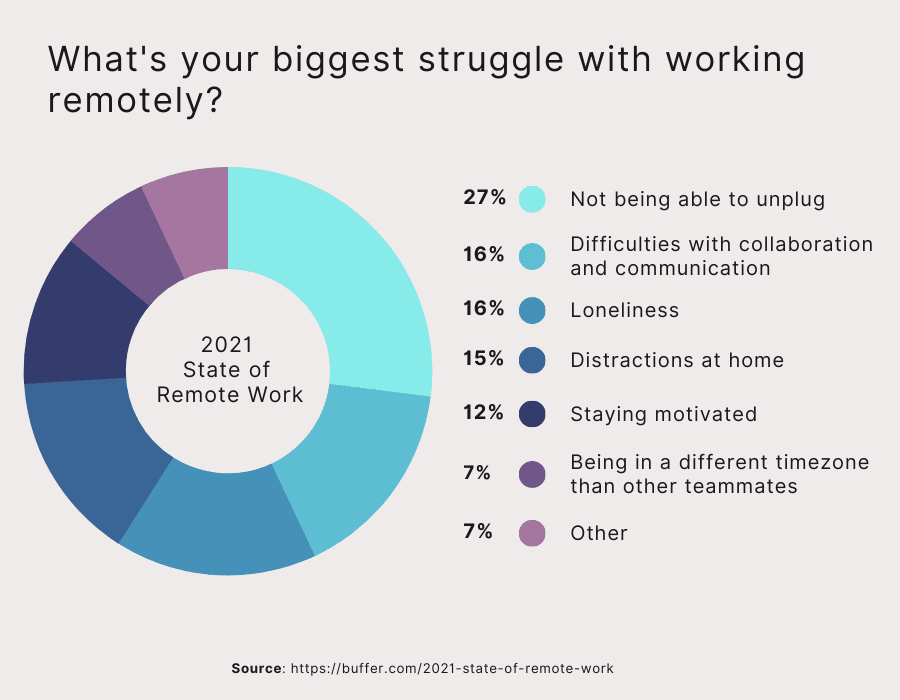
When we think of remote work, many of us think of meetings in our sweatpants, the ability to schedule appointments when we want and not having to sit in traffic for hours. For many, a remote or hybrid schedule is like a dream come true. We’ve looked at the variety of benefits in past articles, among them: work/life balance, increase in productivity, no commute, increased flexibility and autonomy and so much more. And we’ve looked at why offering a remote and/or hybrid schedule is an incredibly effective recruiting and retention tool. But even with all the positives, remote work can present a whole new set of challenges for some employees. Let’s take a look at some of the top 5 remote work complaints:

Con #1: Social isolation

This is probably the number one complaint that employees have about remote work, particularly new workers and young workers who are new in their career. It may be challenging to build strong relationships with colleagues without face-to-face communication, resulting in a sense of disconnection from the team. Social events like happy hours that were once spur of the moment and easy to plan, now take more effort and can end up on the backburner.

Con #2: Work-life boundaries are blurred

While some feel one of the biggest benefits of remote work is work/life balance, others have difficulty unplugging from the office and feeling like they’re always “on call”. It can be difficult to disconnect from work and take breaks when workspace is also a private space. This lack of separation can negatively impact mental well-being if not managed effectively and can lead to burnout.

Con #3: Communication and collaboration are limited

Zoom meetings are all well and good, but some aspects of face-to-face interaction can’t be done remotely. Remote work can make it challenging to build trust through in-person interactions. Some team members may also feel like their access to mentorship, networking and senior leadership opportunities are more limited.

Con #4: Risk of miscommunication

Remote work often involves written communication, which can sometimes lead to misunderstandings or misinterpretations. It may be challenging for remote workers to resolve conflicts effectively without the benefit of immediate in-person conversations.

Con #5: Lack of focus and distractions

While the typical distractions of the workplace may be eliminated, remote work introduces a new set of distractions at home. It’s easy to be distracted from work tasks by household chores, family members or other personal issues. Some workers may not have the space to exclusively dedicate to a home workplace and have to work in busier areas.

Each of us has a unique personality and work style. For every person who enjoys the solitude of working remotely and the freedom that it provides, there’s another who thrives on human interaction or craves the routine and structure of going into the office. That’s why management plays such an important role in implementing a strategic remote/hybrid work strategy and communicating it effectively with team members. Leah M Joppy and Associates is ready to help you reduce the cons of remote work and ensure that team members feel supported and engaged.

Contact us at 301-670-0051 or email us at leah@lmja.com to learn more and get started.

Share

How Can We Help?

Leah M. Joppy & Associates

Derwood, MD 20855