Responsive Menu

Archive

Categories
AI (Artificial Intelligence)

How Is Your Organization Using AI?

It seems like everywhere you look, there’s an article, podcast or discussion about Artificial Intelligence (AI), both positive and negative. But love it or hate it, AI is no longer something agencies are ‘exploring’ or ‘trying out’. It’s becoming a major part of the operational infrastructure. According to a recent study, 55.7% of government organizations now use AI and 42.9% report having formal AI policies in place.

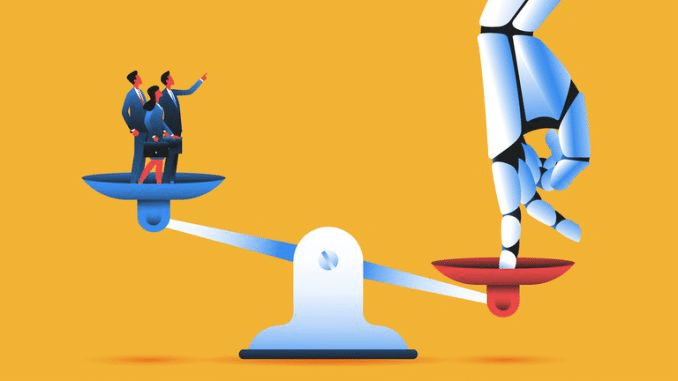
This month, we’ll look at the pros and cons of AI in the workplace. Let’s start on a positive note and look at how AI has transformed the way agencies work. Has your office experienced any of the following?

  • Simplifies repetitive tasks and improves workforce efficiency: This is really AI’s forte. It can handle repetitive and boring tasks, streamline processes and ensure consistency. Best of all, it frees up team members to focus on more complex work.
  • Saves time and resources: For example, AI can quickly summarize lengthy documents, simplify analysis, perform forecasting, etc.
  • Improves decision making: It’s no secret AI can analyze huge amounts of data at incredible speeds. This can help identify patterns and trends, improve forecasting and so much more – all leading to more informed decision making.
  • Improves customer service: For example, the IRS is using AI chat- and voice-bots to better answer taxpayers’ questions.
  • Enhances engagement through learning and development: For example, AI-driven platforms can identify skill gaps among team members and recommend tailored training programs. It can be another tool in your arsenal to help employees grow and advance in their careers.

And here’s a controversial one: some believe that AI has (or has the capacity to) improve work/life balance. Some feel that AI offers significant benefits by reducing workloads, improving communication efficiency and streamlining tasks, all of which contribute to a healthier work/life harmony. This is probably an area where time will tell.

How has your organization embraced AI? Are team members adapting or are some of them having challenges getting on board? If you’d like to discuss your organization’s specific challenges with AI and how to better support your team members, Leah M Joppy and Associates is ready to help.

Learn more by calling us at 301-351-9523 or email us at leah@lmja.com.

Share
Categories
AI (Artificial Intelligence)

What Are The Concerns About AI?

It’s hard to believe, but 30 years ago, we were debating how the internet was going to transform government. Today, we’re asking those same questions about Artificial Intelligence (AI). It’s rapidly evolving and here to stay, whether we like it or not.

While AI can significantly help government functions and potentially save enormous amounts of time and money, there are still a number of cons that need to be addressed. Here are some of the top challenges:

  • Potential job loss: This is probably one of the biggest concerns. As AI systems become better equipped to perform tasks traditionally carried out by people, there is a fear that some jobs may become obsolete.
  • A skills gap and training needs: Integrating AI into the workplace requires team members to learn new skills and adapt to new technologies. The result can be a skills gap, as not all team members may be prepared for these changes.
  • Privacy concerns: A 2024 report by the House Bipartisan AI Task Force flagged privacy protections as a major barrier to AI adoption, particularly for areas like Social Security and taxpayer records.
  • The quality and volume of federal data: AI systems need curated and standardized information to function properly and accurately. However, the massive scale and quality of federal data can make this extremely challenging.
  • Human oversight to flag mistakes: AI systems aren’t perfect and make mistakes. False positives can delay or deny benefits, such as Social Security payments. Meanwhile, false negatives can allow fraud to slip through. Human oversight, and the training that accompanies it, is a necessity.

Most importantly, AI, despite its many capabilities, can’t offer the same empathy, emotional intelligence and personal connection as a human manager. How is your team handling the adoption of AI in the workplace? Leah M Joppy and Associates is ready to discuss the challenges you’re experiencing and help harness the power of AI to create a positive and thriving workplace.

Call us at 301-351-9523 or email us at leah@lmja.com to learn more.

Share
Categories
Employee Engagement

The Big Three Of Employee Engagement

The topic of employee engagement is nothing new in the workplace, but it’s getting more and more attention these days. And with good reason. For an organization to succeed, leaders at every level need to understand and appreciate what makes employee engagement important.

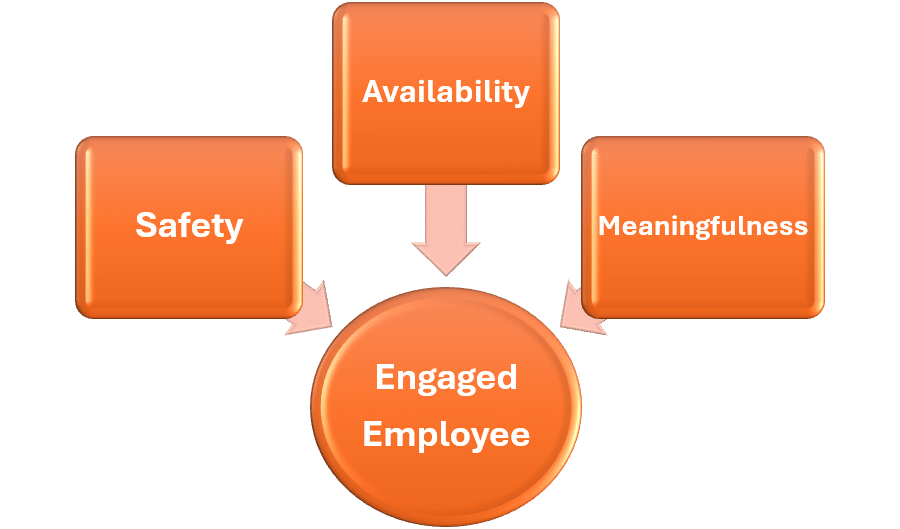
For the last few months, we’ve delved into the “Big 3” of employee engagement: psychological safety, psychological availability and psychological meaningfulness. This month, we’re going to briefly summarize each and look at why they’re so important.

Psychological Safety: This is the belief that team members can be themselves and take appropriate risks without fear of being penalized. It enables them to:

  • believe that they’re a valued member of the team
  • admit and discuss mistakes
  • ask for help and feedback

Why It Matters: Psychological safety plays a big role in decision making, healthy relationships among colleagues, greater innovation and effective execution. Research has shown that prioritizing psychological safety increases productivity, decreases employee stress and reduces turnover.

Psychological Availability: This occurs when employees feel like they have the physical, emotional and mental resources to do their job. Some of the main impactors include: support from leadership, ability to manage workload and stress and feeling like there’s a healthy work/life balance.

Why It Matters: A lack of psychological availability in the workplace is a key contributor to employee burnout. And, as we all know, burnout can be lethal to an organization’s productivity, morale and overall culture.

Psychological Meaningfulness: This is when team members feel motivated within their positions and believe they’re a part of something larger than themselves. While meaningful work looks different for everyone, these three C’s are a common component:

  • Community: Team members feel a strong sense of belonging
  • Contribution: They understand how their work impacts others
  • Challenge: They believe they’re growing in a meaningful way

Why It Matters: Research from the American Psychological Association has shown that workers who perceive their jobs as meaningful report higher job satisfaction, are more engaged, have lower rates of absenteeism and even enjoy better health. It’s no surprise that team members feel more connected when they believe they’re making an impact and a difference.

Having all three of these employee engagement drivers in place can feel like an impossible task. But it doesn’t have to. Leah M Joppy and Associates helps you get to root causes of WHY team members are feeling disengaged. Then, we work with you to come up with ideas and strategies to address these problems quickly.

Learn more by calling us at 301-351-9523 or email us at leah@lmja.com.
Share
Categories
Employee Engagement

Why Should I Pay Attention To Employee Engagement?

Employee engagement is a hot topic these days, but when it comes to tackling engagement issues within an organization, leaders can quickly become overwhelmed and filled with questions. Improving employee engagement doesn’t happen overnight and there’s no ‘one size fits all’ approach. It starts with understanding your team members’ wants and needs and prioritizing their well-being.

Let’s look at some of the top questions surrounding employee engagement:

What exactly is employee engagement? Employee engagement is the degree to which team members feel connected to their work, their colleagues and the organization as a whole. Engagement isn’t driven by one thing. It’s the full picture, from how valued and supported they feel to understanding the impact of their work.

What does an engaged employee look like? An engaged employee brings their best self to work, often going above and beyond. For example, they identify areas where they can develop new skills, take pride in their work and are engaged during meetings.

What does a disengaged employee look like? On the flipside, a disengaged employee does the bare minimum and won’t look for ways to contribute to the wider organization and culture. Because they don’t see a future for themselves, they’re happy to maintain the status quo.

What are some of the top drivers of employee engagement? Engagement is different for everyone, but these drivers should be part of your organization’s strategy:

  • Ensuring each employee is making regular progress
  • Providing autonomy
  • Promoting a culture where ideas are encouraged and shared
  • Creating an environment of learning and development
  • Building manager relationships based on empathy
  • Prioritizing purpose, challenge and respect in the workplace
  • Developing strong team relationships and a sense of belonging
  • Keeping workloads manageable and avoiding burnout

What can leaders do to increase employee engagement? There are so many ways leaders can make a difference. Here are the top 3:

  • Listen to feedback – and implement it where appropriate
  • Model the behavior you want your team to emulate
  • Advocate for your team

Prioritizing employee engagement has real, measurable impacts! Leah M Joppy and Associates offers a fresh approach and perspective, combined with experience tackling all different types of employee disengagement issues, to help you jumpstart your team’s motivation.

Call us at 301-351-9523 or email us at leah@lmja.com to learn more.

Share

How Can We Help?

Leah M. Joppy & Associates

Derwood, MD 20855